

JOURNAL · June 9, 2026
Which Natural Stone Fits? The Big Comparison
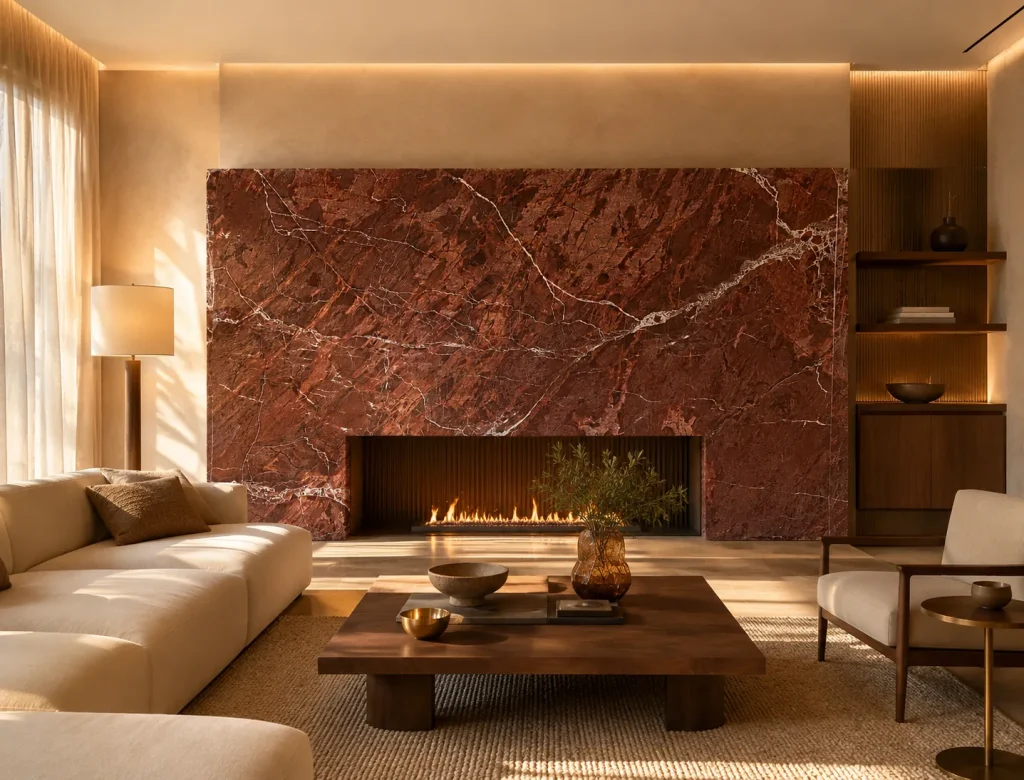
Natural stone is never just a material – it is character. And that is exactly where the question our customers ask most often begins: which natural stone actually suits my project? Marble or granite for the kitchen? Travertine or limestone on the facade? This natural stone comparison sorts the five most important stone families by their real properties – so your decision rests on facts, not on a first impression in the showroom.
The Five Stone Families at a Glance
Before going into detail, one fundamental distinction is worth making. Marble, travertine, limestone and onyx are calcareous stones – they consist mainly of calcium carbonate and react sensitively to acids. Lemon juice, vinegar or limescale removers can leave dull marks (known as etching). Granite, by contrast, is a hard stone, far more scratch- and acid-resistant, making it the most robust candidate of the five.
Marble – Elegant and Expressive
Marble stands for depth and veining. On the Mohs hardness scale it sits at around 3 to 4, so it is relatively soft and acid-sensitive. It is ideal for wall cladding, prestigious floors with moderate use and bathrooms – for kitchen worktops we recommend sealing and mindful care. In our range, Carmine with its warm interplay, the calm Sepia and the dramatic Golden Black show just how differently marble can perform.
Travertine – Mediterranean and Lively
Travertine is a porous limestone with a characteristic pitted structure. These pores can be left open (rustic) or filled (smooth). Travertine feels warm underfoot, is slip-resistant in a brushed finish and is therefore popular for floors, terraces and facades. As a calcareous stone it too is acid-sensitive. Our Silver Travertin brings a modern, quiet note in silver-grey tones to Mediterranean and contemporary designs alike.
Granite – The Durable One
If you are wondering whether to choose marble or granite for a heavily used kitchen, the technical answer is clear: granite. With a Mohs hardness of 6 to 7 it is scratch-resistant, heat-tolerant and largely acid-resistant. That makes it the first choice for worktops, high-traffic floors and facades. Visually, granite is grainier and less veined than marble – but nearly indestructible.
Onyx – The Translucent Statement
Onyx is the most spectacular yet most sensitive stone. Its translucency allows backlit walls, counters and light objects of striking effect. Onyx is soft and acid-sensitive, so it belongs in places with low mechanical stress – as an accent, not a work surface. Our Blue Onyx and White Onyx reveal their full beauty especially when backlit.
Limestone – Understated and Natural
Limestone convinces with an even, calm appearance and matte naturalness. With a hardness around 3 to 4 it needs care similar to marble, but is often more subtle in its markings. It is excellent for floors, walls and facades in restrained concepts. The elegant Pietra Gray with its fine white veining is a classic for sophisticated interiors.
Properties and Care in Direct Comparison
- Hardness: Granite (6-7) clearly ahead of marble, travertine, limestone and onyx (approx. 3-4).
- Acid resistance: Only granite is largely acid-resistant; all calcareous stones react to acids.
- Care effort: Granite the lowest; onyx and marble the highest.
- Kitchen: Granite ideal; marble and limestone only with sealing and care.
- Bathroom and wall: Marble, onyx and travertine shine here.
- Floor and facade: Travertine, granite and limestone are especially long-lasting.
As a rule: all natural stones benefit from suitable sealing and should be cleaned with pH-neutral, stone-safe products – no acids, no abrasive cleaners.
How to Make the Right Choice
The question of which natural stone is the right one answers itself through the interplay of use, location and desired look. An acid-free lobby tolerates more marble than a family kitchen; a sheltered interior wall more onyx than a weather-exposed facade. Considering these natural stone properties early avoids later disappointment – and rewards you with a stone that brings joy for decades.
Would you like to buy natural stone but are unsure which one suits your plans? Request a sample from Mercan Fliesen or contact us for personal advice. We supply marble, travertine, granite, onyx and limestone as blocks, slabs and tiles – and help you find exactly the stone that fits your project.
Frequently asked questions
Marble or granite – which is better for the kitchen?
For heavily used kitchen worktops, granite is the better choice. With a Mohs hardness of 6 to 7 it is scratch-resistant, heat-tolerant and largely acid-resistant. Marble is softer and acid-sensitive; it works in the kitchen only with sealing and mindful care.
Which natural stone is the easiest to maintain?
Granite is the easiest to maintain of the five families because it is hard and largely acid-resistant. Marble, travertine, limestone and onyx are calcareous and react sensitively to acids. They benefit from sealing and should be cleaned only with pH-neutral products.
Why are marble and onyx sensitive to acid?
Marble and onyx consist mainly of calcium carbonate. Acids such as lemon juice, vinegar or limescale removers attack the surface and leave dull etch marks. That is why these stones should be cleaned acid-free and protected from contact with acidic substances.
Is travertine suitable for outdoor use and facades?
Yes. Travertine is a robust, warm stone that is slip-resistant in a brushed finish and valued for floors, terraces and facades. As a calcareous stone it remains acid-sensitive, but outdoors it is very durable when properly installed and sealed.